


Traditional Sauna or Infrared Sauna: What's the Difference for Your Well-Being?
Between busy days, mounting stress, and the need to unwind, the sauna is becoming an increasingly popular wellness option in Switzerland. But should you choose a traditional 90°C sauna or a gentle-heat infrared cabin?
Both promise relaxation, sweating, and recovery, but how they work and their effects on the body are very different. At Atelier Nordic, we help our clients choose based on their health goals, lifestyle, and available space.

Heating Principle and Sensations
Type of Heat: Heated Air vs. Infrared Waves
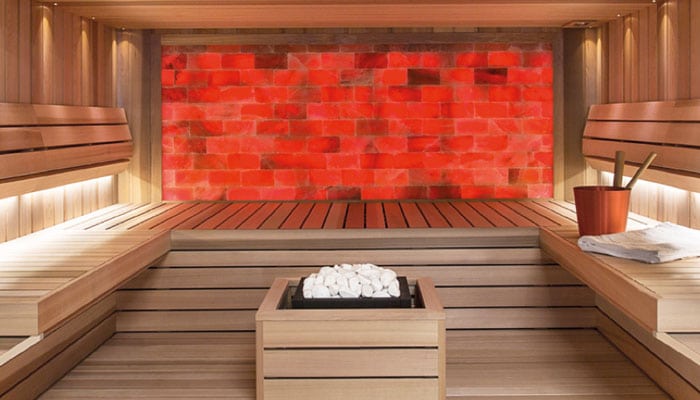
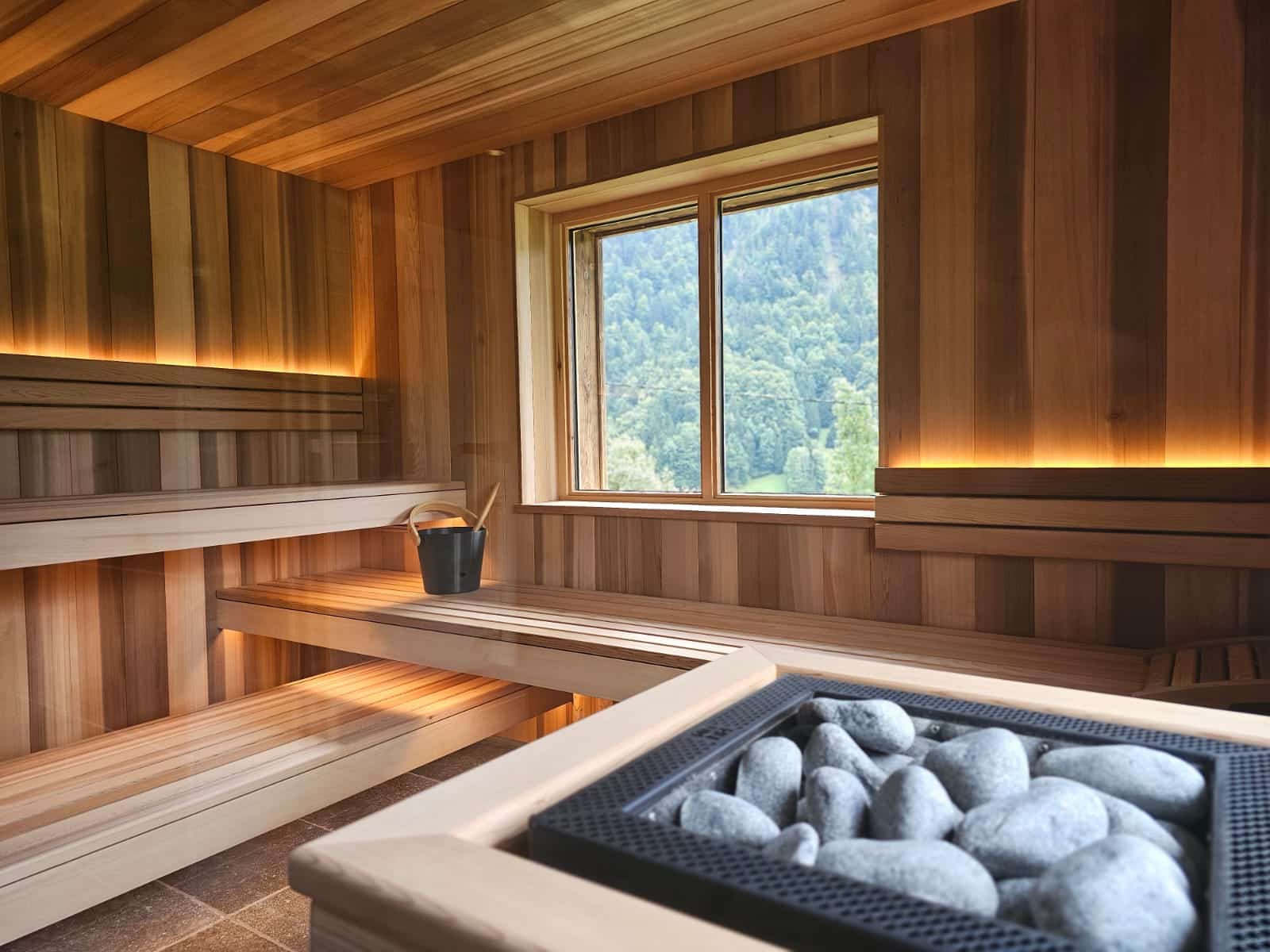
The traditional sauna relies on a stove that heats volcanic stones. These stones release dry heat into the air inside the cabin, which can be humidified by pouring water onto them. This system envelops the body in a warm, dense atmosphere. In contrast, the infrared sauna uses panels that emit infrared waves. These waves penetrate the body’s tissues directly without heating the surrounding air, creating a gentler, more targeted sensation of heat without the stuffy feeling. We offer various models of traditional saunas for indoor use, tailored to your needs.
Temperature, heating time, and perceived temperature
The temperature in a traditional sauna typically ranges from 70 to 100°C, compared to 40 to 60°C in an infrared sauna. The former requires a warm-up time of 30 to 45 minutes, while the latter is ready in 10 to 15 minutes. The thermal sensation varies greatly: one envelops the body in intense heat, while the other works deeply, promoting gradual sweating. This difference affects the duration of the session and how sweat is released.
Ambience, Humidity, and User Comfort
In a traditional sauna, humidity can be adjusted, ranging from 10 to 25 % depending on how much water is added to the stones. This interaction with natural elements, such as wood and steam, creates an authentic atmosphere. The infrared sauna, on the other hand, remains very dry, with humidity below 10%. It offers immediate comfort, with no adjustment period.

Effects on Health and Well-Being
Sweating, Detoxification, and Skin Health
The intense heat of a traditional sauna, ranging from 70 to 100°C, triggers profuse sweating within the first few minutes. This sweating promotes the elimination of toxins and supports natural detoxification processes. In comparison, an infrared sauna works more deeply—despite a lower temperature (40 to 65°C)—by stimulating sweating from the internal tissues. In both cases, the skin emerges purified, better oxygenated, and visibly healthier.
Blood Circulation, Muscle Recovery, and Pain
The rise in temperature inside the cabin causes blood vessels to dilate. This improves circulation and promotes better oxygenation of the muscles. The traditional sauna, with its enveloping heat, relaxes the entire body.
The infrared sauna, on the other hand, targets deep tissues, making it an effective option for relieving joint or muscle pain after exercise. We recommend this gentle heat to aid in physical recovery.
Mental Relaxation, Stress Management, and Breathing
At Atelier Nordic, we see every day just how much the sauna has become a haven for relaxation. By reducing cortisol production, both types of saunas promote mental calm. The calm environment of the sauna, combined with the constant heat, encourages deep, steady breathing.


Usage, Costs, and Installation
Energy Consumption and Operating Budget
There are significant differences in energy consumption between a traditional sauna and an infrared sauna. A traditional model heats the surrounding air to a high temperature, which requires between 4 and 9 kWh per hour. In contrast, an infrared sauna uses emitters that target the body directly, resulting in reduced energy consumption of 1.5 to 3 kWh per hour. This is equivalent to the energy consumption of a standard household appliance, while providing penetrating heat that promotes sweating and detoxification.
This energy efficiency helps reduce the cost per session, especially if you use thermal therapy several times a week. Choosing an infrared sauna is therefore a smart option for regular home use, without sacrificing the benefits of deep sweating.
Care, Durability, and Maintenance
A traditional sauna requires more structured maintenance. The stove must be inspected annually, the volcanic stones cleaned or replaced, and humidity levels monitored to preserve the wood. In comparison, an infrared cabin simply requires occasional surface cleaning and inspection of the emitters. Fewer mechanical parts mean fewer maintenance requirements.
Both systems, when properly maintained, offer excellent durability. Wood remains a living material: it must be treated with care to ensure the longevity of the installation. We prioritize wood species suited to dry heat or infrared, depending on the type of sauna chosen.
Installation, Space Requirements, and Flexibility of Use
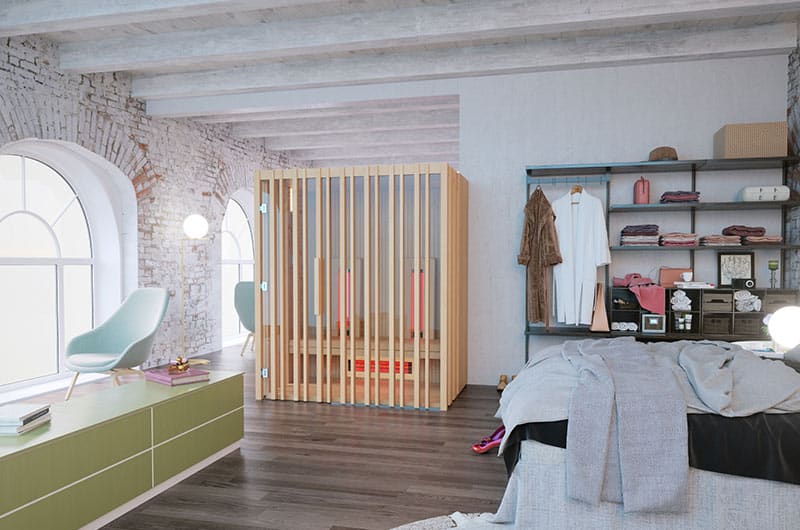
Infrared saunas offer a clear advantage when it comes to installation. Their compact size and connection to a standard 230 V outlet allow for quick installation in a small space—such as a bedroom, bathroom, or relaxation area. They fit seamlessly into modern interiors without requiring major renovations.
Traditional saunas, which are larger, require a dedicated space, proper ventilation, and a more powerful electrical connection. At Atelier Nordic, we provide personalized support for every project, whether it’s a complete wellness space or a single cabin. The goal remains the same: to offer you a moment of authentic relaxation, at your own pace.