


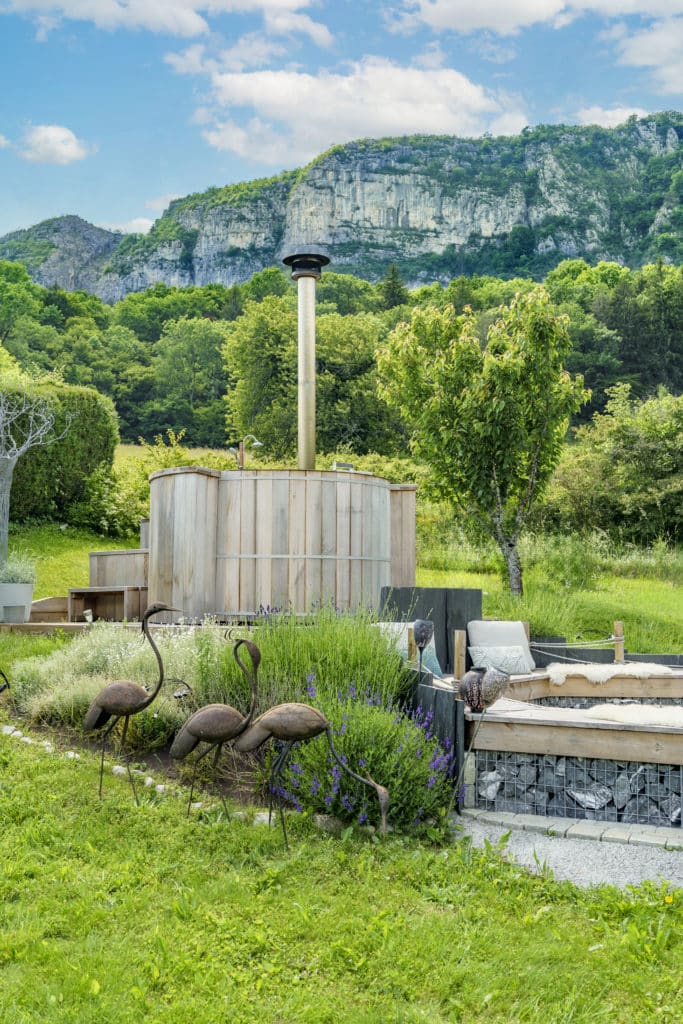
How does a Nordic bath work?
A Nordic hot tub uses an average of 10 to 15 kg of wood per session. But how does this 100% self-sufficient system manage to heat and maintain the water at 38 °C, even in the middle of winter? At Atelier Nordic, we’re often asked this question. We’ll explain exactly how it works, from the tub to the stove, including filtration and daily maintenance.

Operating Principles and Essential Components
Wood-Burning Heating and Stoves: Mechanism and Thermoregulation
At the heart of the Nordic hot tub is a simple and efficient wood-burning heating system. The stove—which is either built into the tub or located outside, depending on the model—operates by natural convection. By burning wood, it heats the water without using electricity. This heating method allows the temperature to rise gradually, typically controlled using a submerged thermometer. We can thus adjust the fire to reach the desired level of comfort, completely on our own.
Insulation, container, and lid: natural heat retention
The tub, often made of solid wood such as red cedar, is designed to retain heat. Thanks to the material’s natural insulation—and, in some cases, an additional layer of insulation—the temperature remains stable for longer. The lid plays a key role: by keeping it closed between uses, we reduce heat loss and speed up the next heating cycle. This combination ensures optimal comfort without excessive energy consumption.
Water Circulation and Filtration: Air Stone and a Simple System
Water circulation occurs naturally via thermosiphon: hot water rises, and cooler water sinks, creating constant movement without the need for a mechanical pump. To maintain water quality, we incorporate a discreet filtration system—often a cartridge filter—that makes maintenance easy. Optionally, a bubbler can be added to enhance the bath with a gentle, relaxing massage. This device is quiet and energy-efficient, while enhancing the sensory experience.
Home Installation and Setup
Site Selection: Soil, Access, and Landscape Integration
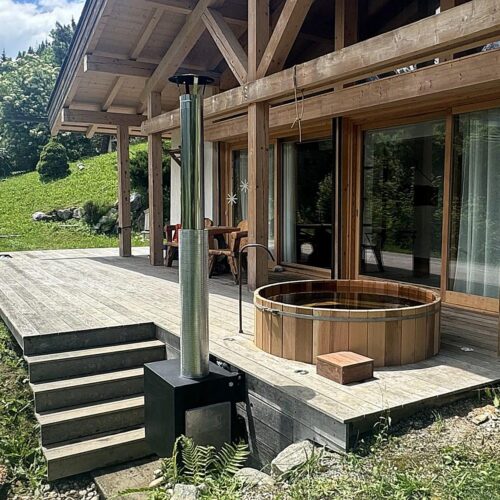
Before installing a wood-fired Nordic hot tub, it is essential to choose a stable and properly prepared location. We recommend a concrete slab at least 10 cm thick to support the total weight of the filled tub, which can reach 2 metric tons for a 4- to 6-person model. The access area must be clear to allow for transporting the tub and installing the stove. The hot tub can be integrated into the landscape using natural elements or wooden structures to create a harmonious look.
Stove Installation and Safety Guidelines: Ventilation and Regulatory Clearances
The wood-burning stove must be installed with care. We adhere to the minimum safety distances, including a 3-meter clearance from property lines. Proper ventilation is essential to ensure efficient and safe combustion. The installation must also allow for easy access to load wood and monitor the fire.
Initial Filling: Filling, Water Quality, and Initial Adjustments
Filling is done simply by letting water overflow from a garden hose. Once the tank is full, we check the water quality: pH, hardness, and clarity are essential indicators for the filtration system to function properly. The water must be clean from the start to prevent clogging. We then install the thermometer to monitor the temperature during heating. A good lid helps limit evaporation and retain heat longer.
Daily Use, Maintenance, and Environmental Impact
Heating and Temperature Control: Routine, Timer, and Aromatherapy
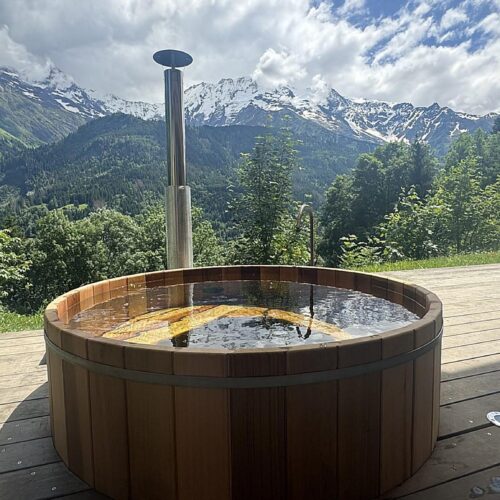
Lighting the wood stove is the first step in every bath. Depending on the size of the tub and the type of stove, the heating time ranges from 2 hours and 30 minutes to 5 hours. We use an average of 10 to 15 kg of wood, depending on the type of stove. Once the desired temperature is reached, a thermometer is used to monitor it.
To enhance the experience, we add a few drops of essential oils to a floating diffuser or directly into the water. Aromatherapy blends perfectly with the warmth of the Nordic bath, providing complete sensory relaxation.
Routine Maintenance: Draining, Cleaning the Tub, and Caring for the Wood
Proper maintenance ensures the longevity of the hot tub and the quality of the water. We recommend draining the tub every two weeks if it is not equipped with a filtration system. Clean it using a soft brush and rinse with clean water; do not use harsh chemicals. Daily filtration, for 6 to 8 hours, helps limit the growth of algae and bacteria.
The exterior wood requires minimal care. You can brush it to remove dirt, then oil it once a year with a product suitable for wood exposed to moisture. The cover also protects the tub from outside dirt.
Costs and Consumption: Energy Efficiency, Wood Savings, and Environmental Benefits
The energy efficiency of a hot tub depends on several factors: the quality of the insulation, the type of stove, the tub’s capacity, and how often it is used. On average, an internal stove heats 1,000 liters with 10 kg of wood, while an external stove heats up to 2,200 liters with 25 kg. Electric systems reduce wood consumption by maintaining the temperature using electricity.
Using local, untreated wood minimizes the environmental impact. The water can be reused for watering plants after draining, provided it does not contain any chemical additives. By optimizing filtration and covering the tub after each use, we reduce heat loss and the frequency of refilling.