


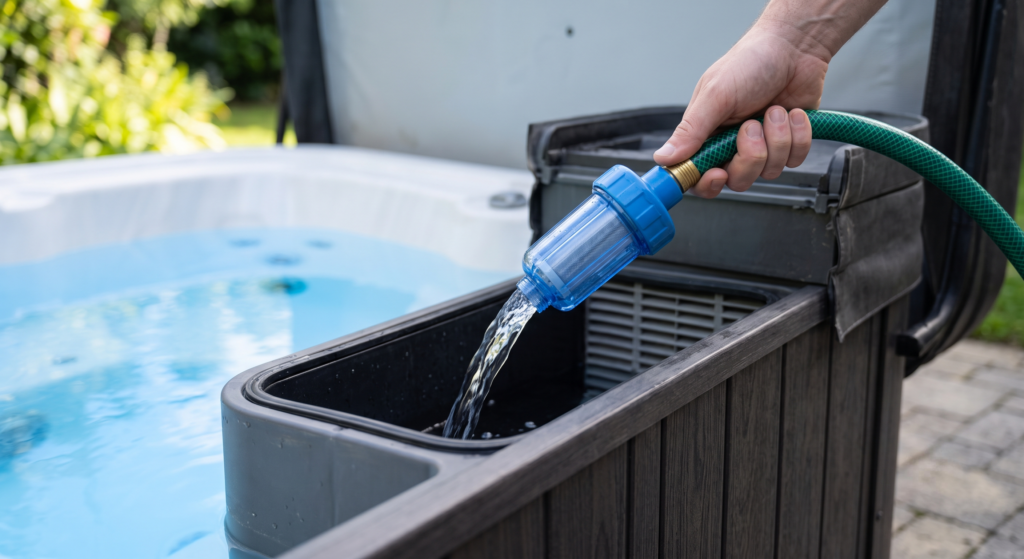
Does your water get foamy as soon as someone gets in the pool? Is the pH level refusing to stabilize despite your adjustments? Does an unpleasant odor linger even after a shock treatment? These three signs all point to the same thing: it’s time to drain the pool.
A poorly executed drain can scratch the acrylic, clog the pipes, or permanently throw the new water out of balance. Here is the procedure we follow, in order, without improvising.
When is it really time to change the oil?
The basic rule is based on usage. A spa used by two people several times a week needs to be drained, on average, every three months. Heavy family use shortens this interval.
But the schedule isn’t the only factor. Certain signs call for an immediate drain, even if the water looks fresh.
Water that cannot be stabilized despite correct chemical levels indicates a buildup of dissolved residues. Persistent foam points to an accumulation of lotions, cosmetics, and organic matter. As for the smell—it never lies.
When these three symptoms occur together, there’s no point in adding more cleaner. The water has reached the end of its useful life.
Flush the pipes before emptying them
This is the step that most pool owners overlook. Draining the pool directly leaves all the biofilm stuck in the hidden pipes.
Biofilm: The Hidden Enemy
Biofilm is a sticky layer of bacteria that coats the inside of massage circuits. It feeds on organic residues and continuously reforms. Simply cleaning the tub is never enough to remove it.
Before draining the tub, pour a drain cleaner into the water still in the tub. Let the filtration system run for the indicated time, which is often between one and several hours. You’ll see impurities rise to the surface.
This rinse ensures that the fresh water won’t be recontaminated right from the start. On our high-end Jacuzzi spas, this step significantly extends the lifespan of the circulation systems.

Drain without straining
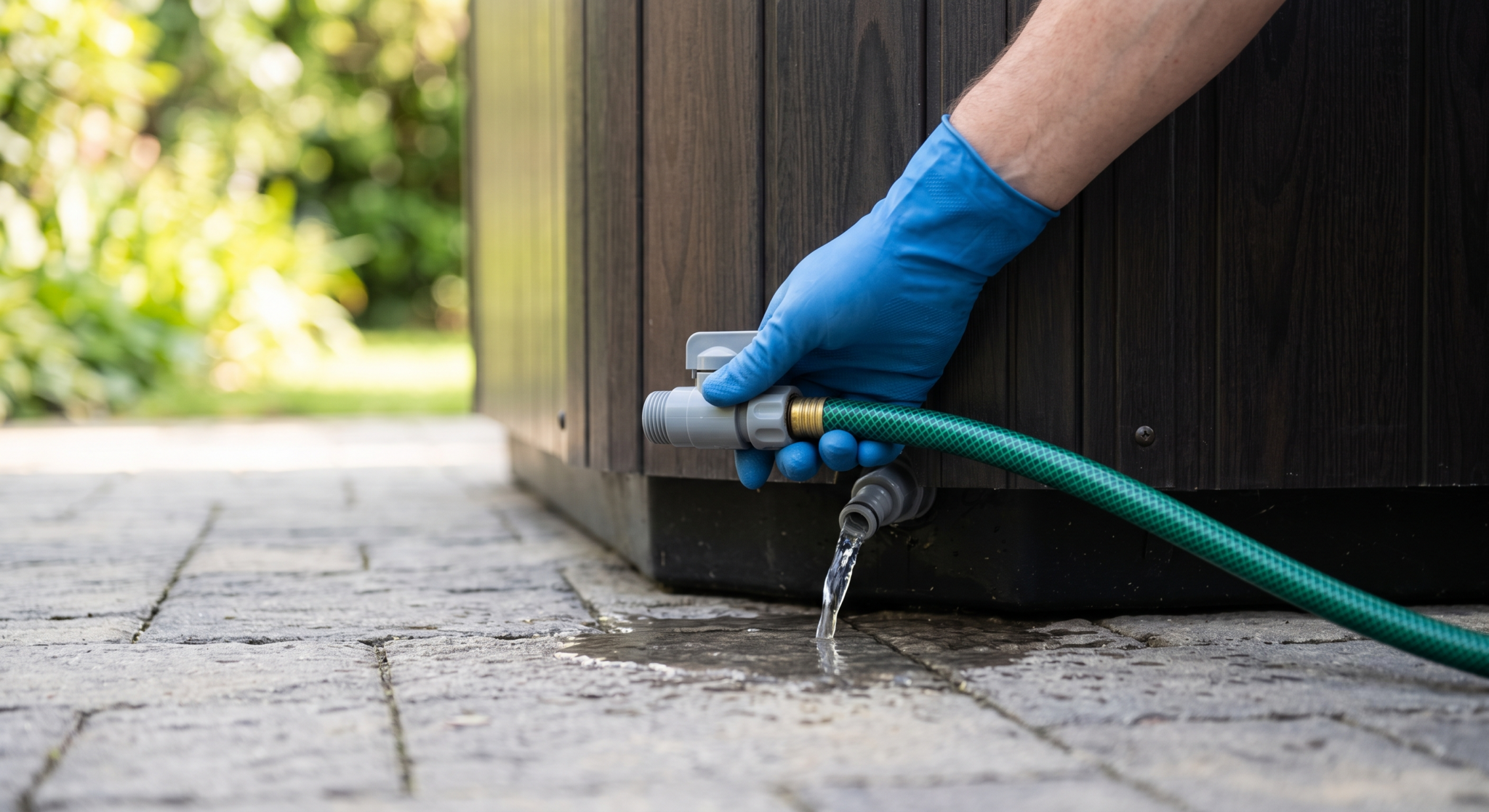
Always turn off the power before emptying. A heating system that runs dry will be damaged within minutes.
Connect the hose to the drain valve and let the water drain by gravity. To speed up the process, a sump pump works very well, but monitor the water level to ensure it doesn’t run dry.
Direct the water to an area that can handle treatment residues. Avoid directly watering sensitive plants with water that still contains disinfectant.
Clean the tub without scratching the acrylic
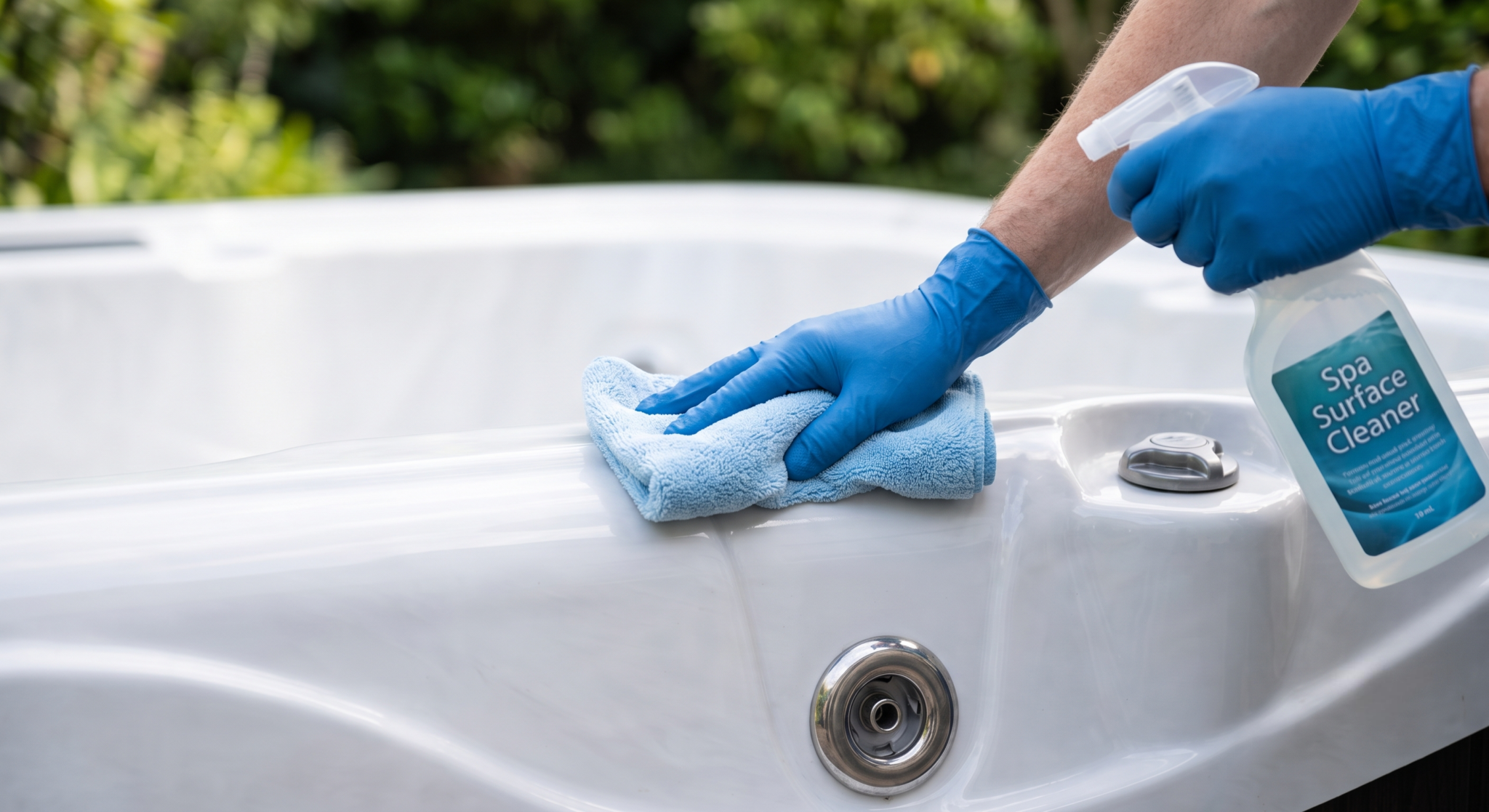
Acrylic surfaces are easy to clean, as long as you avoid using any abrasive products. No scouring pads, no standard household detergents.
Use a soft microfiber cloth with a spa-specific cleaner. Pay special attention to the waterline, where oils tend to accumulate. This is often the dirtiest area.
Rinse thoroughly to remove all traces of the product. Cleaning product residue immediately causes foam to form in fresh water.
With wooden models, the approach is different. A wooden spa requires even gentler maintenance of the finish, without using harsh chemicals on the interior walls.
Filters: Cleaning and Rotation
A clogged filter undoes all your hard work. Take advantage of the empty drum to give it a thorough cleaning.
First, rinse the cartridge under running water, fold by fold, to dislodge any debris. Then let it soak in a special filter degreaser for several hours. A simple rinse will never dissolve caked-on oils.
Ideally, you should have two sets of cartridges. While one filter is soaking and drying, the other remains in use. This rotation doubles the lifespan of each cartridge.
Replace the cartridge as soon as the pleats remain gray despite cleaning. A saturated filter no longer traps anything.
Fill with a prefilter
Tap water contains lime, metals, and sometimes iron. Filling the spa directly introduces all of these elements into the water.
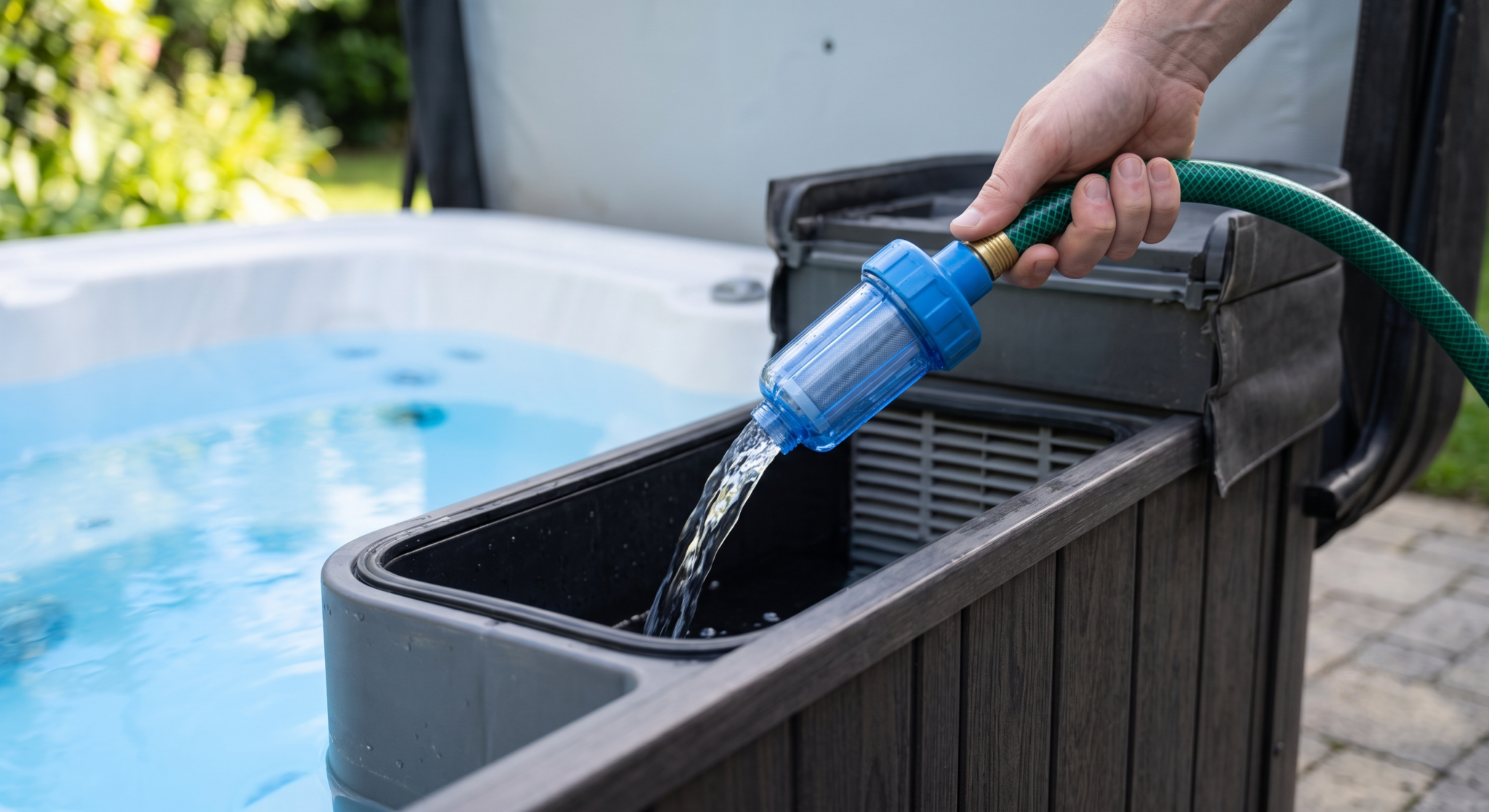
Screw a pre-filter onto your fill hose. It captures most of the lime and metals before they enter the spa. Result: Balancing the water is much easier afterward.
Fill through the suction nozzle rather than from the top. This removes air from the pipes and prevents air pockets that can clog the pump when it restarts. A useful tip for hard-sided spas as well as swim spas.
Balancing the water in the correct order
Many people make the mistake here of adjusting the pH before doing anything else. Order is extremely important.
First the TAC, then the pH
TAC, or total alkalinity, stabilizes the pH. If you adjust the pH without first correcting the TAC, it will become unstable again within a few hours. You’ll just be going in circles.
First, aim for a TAC between 80 and 120 ppm. Once you’ve established that baseline, adjust the pH to between 7.0 and 7.4. Only then will the pH remain stable over time.
Next, add your disinfectant—bromine or chlorine, depending on your system. Let the filtration system run for several hours before retesting. The water must circulate so that the chemicals are distributed evenly.
Restarting the heater and final check
Reconnect the power supply and start the heating process once the water level is correct. The system must never be heated before it is completely submerged.
It takes several hours for the water to heat up, depending on the quality of the insulation. That’s where thermal performance makes a difference on your bill. Our pools retain heat longer thanks to their enhanced insulation.
Check the balance one last time the next day. New water often stabilizes within twenty-four hours. Adjust slightly if necessary, but don’t overdo it.
Now you have clear water, clean pipes, and undamaged surfaces. If your hot tub is nearing the end of its lifespan or if you’re considering a better-insulated model to reduce maintenance, our teams design outdoor hot tubs built to last. A good hot tub is also judged by how easy it is to maintain.